
How to Draw a Collie Step by Step
This collection features step-by-step drawing lessons on the topic. Choose a drawing and follow the stages.
Choose a lesson
Choose a drawing to view its steps or video.
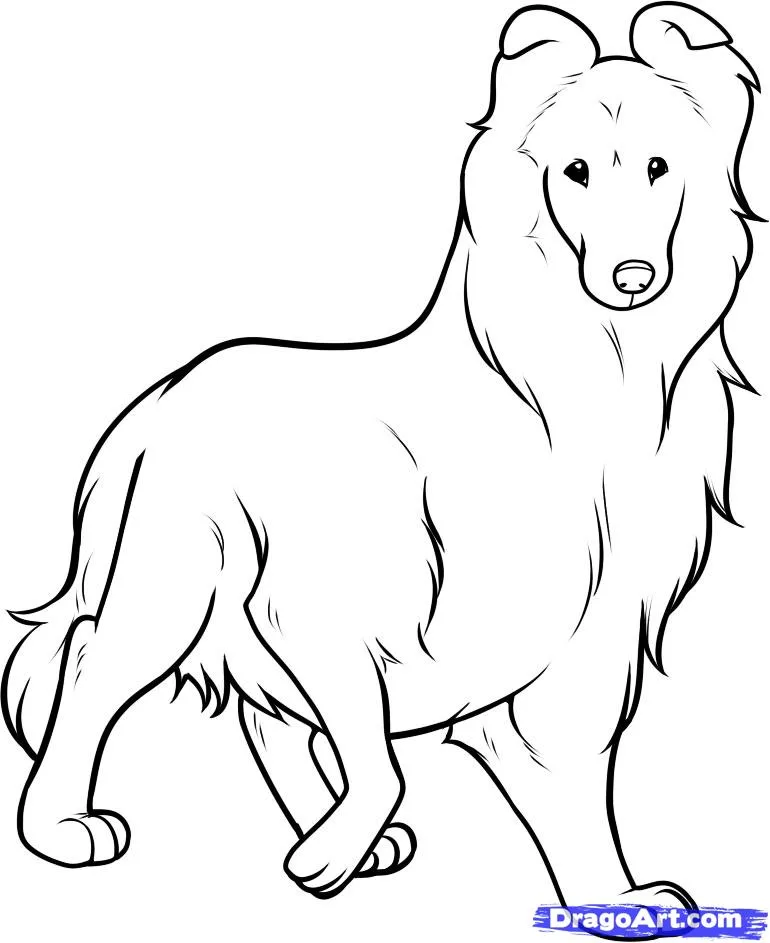
Collie
+1+4+729Open stepsShow less
Log in to save your marks. Log in
Hi! Today we’ll draw a Collie. Before we start, we need some guidelines. Draw two circles of different sizes, one for the head and one for the body, and connect them with a straight line. Then add guidelines inside the first circle to help you draw the dog’s face.
Start defining the shape of the dog’s muzzle, then add guidelines for the Collie’s eyes.
Continue drawing the eyes as shown, then add the fold between them and draw the nose. Once that’s done, move on to the next step.
As you know, this breed has a long, thick coat, so we need to pay special attention to it. Carefully draw the Collie’s fur lines as shown. Also notice how the dog’s ears seem to sink into its fur.
In this step, draw the lines of the back and the fur on the dog’s chest, as shown.
Start drawing the Collie’s two front paws, carefully defining their curves and the toes at the bottom of each paw.
DRAW THE COLLIE’S HIND LEGS AND BELLY LINES. Once that’s done, move on to the second-to-last step of this drawing lesson.
I think this is the easiest step: all you need to do is finish the long tail. Notice that it should be fluffy, too, since the Collie has a long coat. Once that’s done, erase all the guidelines you used while drawing it step by step.
That’s it! You’ve just drawn this lovely dog, and now all that’s left is to color it. That’s all for now—good luck, and I hope to see you on our site again. See you!
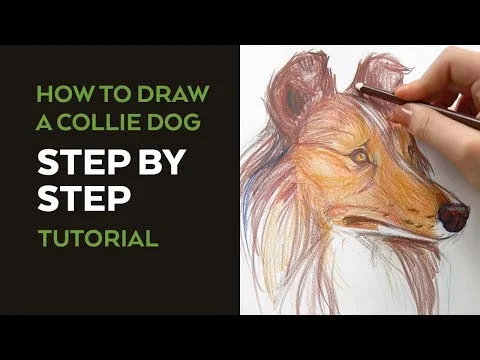
Collie
+0+0+0VideoOpen videoShow less
Log in to save your marks. Log in
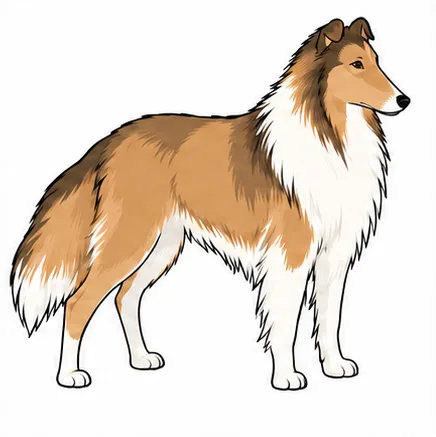
Collie
+0+0+08Open stepsShow less
Draw the Collie standing, with a narrow muzzle and long, bushy tail. Set off its white ruff and chest against the reddish-brown coat.
Log in to save your marks. Log in
Sketch the head, chest, thigh, and long legs, and mark the lowered tail.
Outline the torso with an uneven, shaggy line and add small ears.
Refine the long, narrow muzzle and curled ear tips.
Draw the legs, adding fur along their back edges.
Outline the fluffy tail with a pointed tip.
Draw the eye, nose, and mouth line.
Add long tufts around the ruff, belly, and sides.
Color the back reddish brown with a dark area on top. Leave the ruff, chest, legs, and tail tip white.
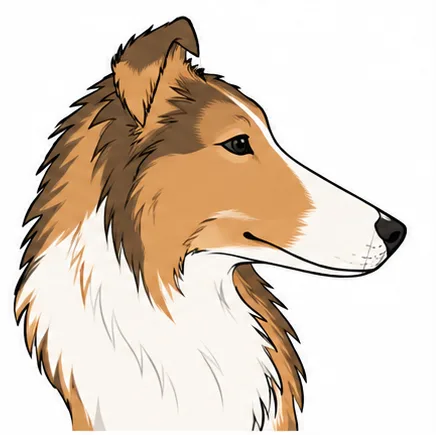
Collie Head
+0+0+08Open stepsShow less
Draw the Collie in profile, with a long, narrow muzzle and fluffy white ruff. Show the curled tip of the nearer ear.
Log in to save your marks. Log in
Sketch the head, elongated muzzle, ear, and neck.
Outline the back of the head with short, pointed tufts.
Refine the folded ear and long bridge of the nose.
Add the fluffy neck and lower edge of the muzzle.
Draw the nose at the very tip of the elongated muzzle.
Add a small eye and thin mouth line.
Draw the fur near the ear, on the cheek, and around the ruff.
Color the head reddish with a dark back of the head, leaving the muzzle and ruff white. Make the nose and eye black.
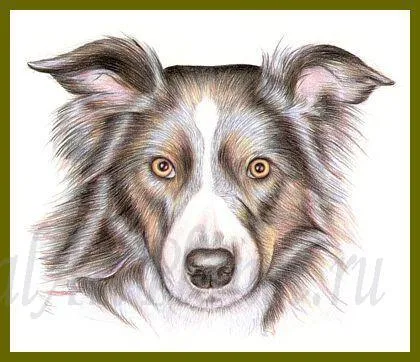
Border Collie Face
+0+5+477Open stepsShow less
Log in to save your marks. Log in
Outlining the drawing. The first step in this drawing lesson is to sketch the basic outline of the head with a purple pencil. Purple was chosen for the outline and to establish the dark colors on the dog’s muzzle, because other colors will blend over it easily. Technique: Many beginners who use colored pencils want to make the initial sketch in graphite because it’s easier to erase mistakes. You should never do that: combining the two media looks awkward, and graphite will muddy the clean colors.
Applying the base tones and textures. The second part of the drawing is to establish the tone of the eyes, a key feature of any portrait, and the dark tones in the dog’s fur. Technique: It’s important that all the lines you use to suggest the fur follow the direction in which it grows.
Building up the color, part 1. Once you’ve established the dark tones, it’s time to build up the color of the dog’s fur. This can be tricky because its thick, shiny coat bends and scatters the light, creating a shimmering surface. Technique: It’s easier to darken a light color than to lighten a dark one, so start with light colors and gradually work toward darker ones. This helps keep the brighter colors fresh. At this stage, continuing to follow the direction of the fur, layer yellow over the purple tones. The colors mix to create brown, while areas of pure yellow and purple add vibrancy. Yellow is also used as the base color for the eyes.
Building up the color, part 2. Continue creating the dog’s shiny coat by adding a layer of orange over the dark areas of the muzzle. Orange is also used to color and outline the irises of both eyes.
Building up the color, part 3. Now add blue to the lighter areas of the dog’s fur. Keep drawing lines that follow the direction of the fur to build up its overall texture and shape.
Bringing the visual elements together. In this penultimate step, use a dark brown pencil to unify the tone, color, and texture of the dog. Technique: Carefully draw thin lines over the colored areas of the muzzle, continuing to follow the direction of the fur. Make the lines shorter and sharper around the eyes and in the center of the muzzle, then gradually wider and heavier as you move toward the head. The dark brown pencil will cover most of the orange, yellow, and blue, but leave enough of those colors visible to suggest a healthy shine in the dog’s coat. Use the dark brown pencil more heavily in some strokes to deepen the shadows and emphasize the eyes. To finish this stage, add a little pink to the skin inside the ears and use it to shade the soft white hairs around the nose, lips, and neck.
Refining the tone and texture. The final step in drawing Ben the border collie is to refine the tones and textures with black. Technique: A sharp black pencil lets you darken the deepest shadows and improve the texture of the dog’s fur. It increases the contrast and makes the drawing more striking. Use black in the same way to boost the contrast and shiny texture of the nose and eyes. Always use black sparingly and carefully, because it can easily muddy your brighter colors. It is the riskiest color to use because mistakes are hardest to correct. When working with media that blend, such as colored pencils, watercolor, crayons, or oil pastels, apply black last.
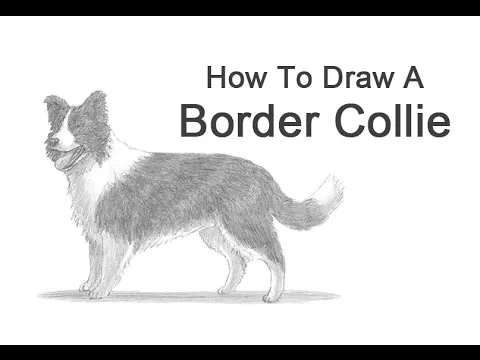
Border Collie Full Body
+0+0+0VideoOpen videoShow less
Log in to save your marks. Log in







cat-vill
Спасибо за урок ^^
Котенок
Надо попробовать.....
аля
люблю рисовать
Кристина
Кисуля, не ври! Это не ты рисовала.
яна
Вот еще
яна
Привет у меня другие рисунки вот
Волчица 9
ВИВИКЕТ это НЕ КОЛЛИ А ШЕЛТИ
алька
супер художница а золотистого ретривера сможешь?
Эрика
Можно сделать по этому фото урок)Или кто хочет пусть тот нарисует)
София!!!!
Всем привет!!!А кто эбби рисовал из монстер хай??? Кто рисовал выложите пожалуйста!